

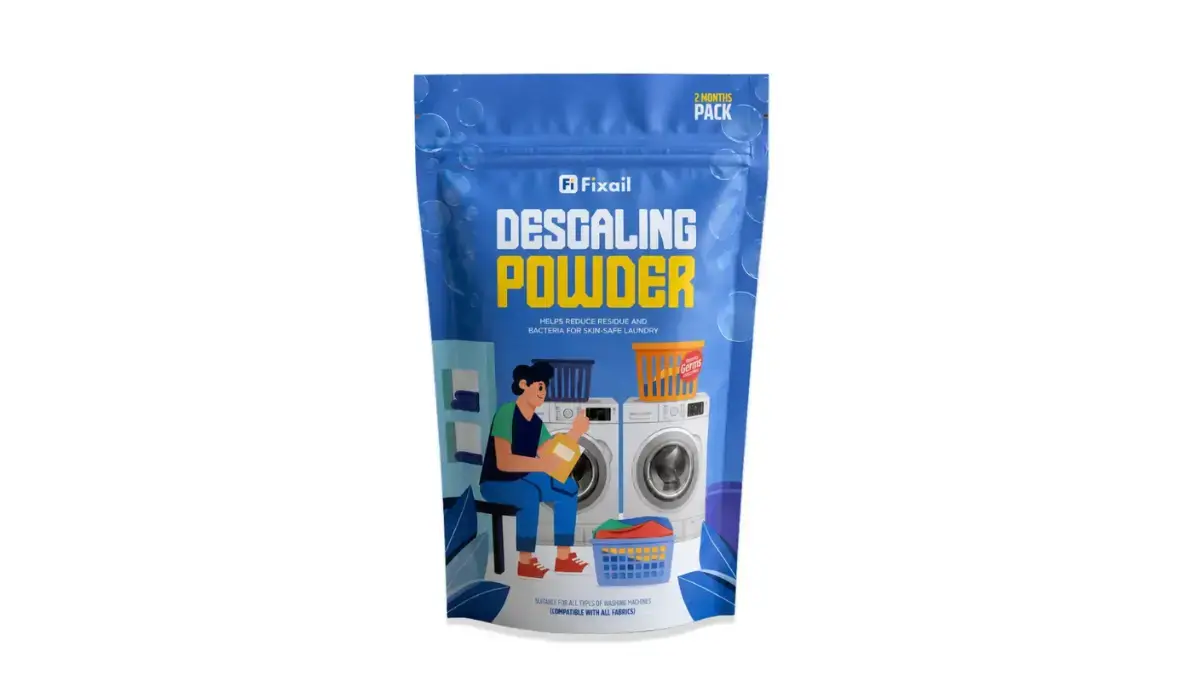
Hard Water Ruining Your Washing Machine? Here's How Fixail Descaling Powder Fixes It
Have you noticed your washing machine taking longer to heat, clothes coming out with a faint smell, or a chalky white residue building up near the detergent tray? If you live in an area with hard water, your machine could be silently accumulating limescale with every single wash and a good washing machine descaling powder is one of the simplest ways to stop it before it turns into a costly repair.
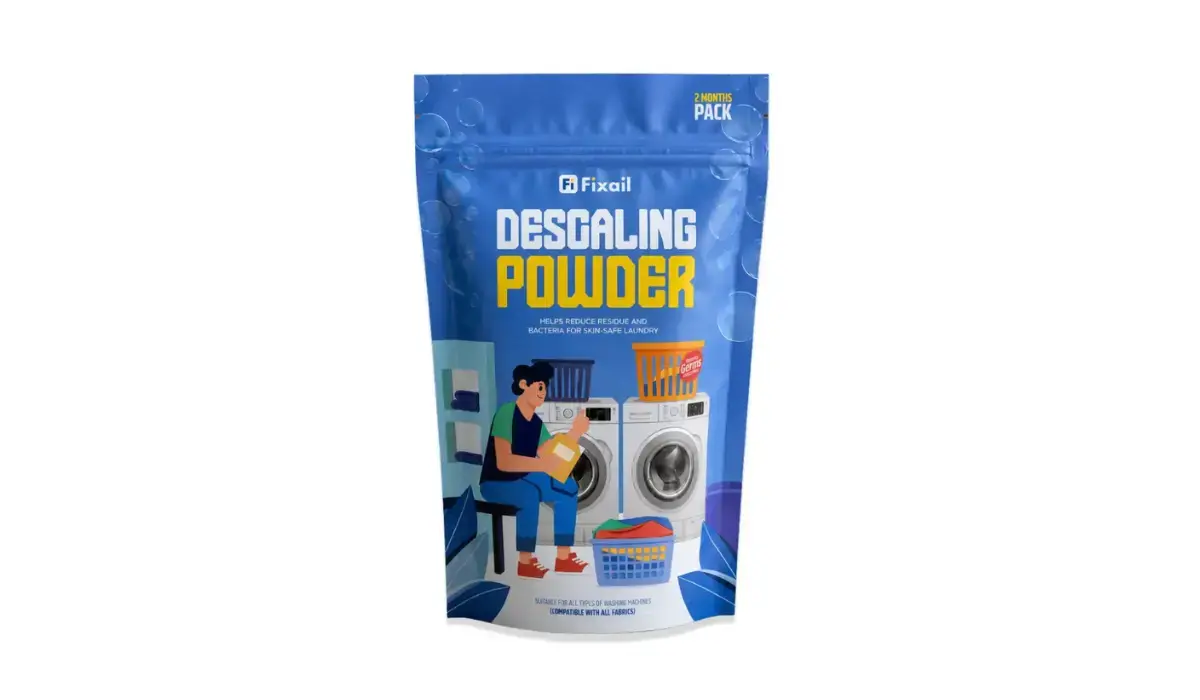
Buy Fixail Washing Machine Descaling Powder here
Why Hard Water Is Harder on Your Washing Machine Than You Think
Hard water contains higher levels of dissolved calcium and magnesium, and every time your machine heats water for a wash cycle, some of these minerals are left behind as scale. Unlike a kettle, where limescale is at least visible, a washing machine hides this buildup inside the heating element, the drum, and the internal pipework areas you never actually see. Over months, this invisible buildup reduces heating efficiency, increases energy and water usage, and adds strain to components that were never designed to work through a layer of mineral deposit.
Signs Your Machine Is Already Affected
- Longer wash cycles than the settings should normally take
- A musty or slightly metallic smell in clothes after washing
- Visible white residue near the detergent tray or drum rim
- Reduced water temperature during hot wash cycles
- Increased noise, especially during the heating phase
If even two of these sound familiar, limescale buildup is a likely cause, and it's very common, since hard water affects a large share of Indian households to varying degrees.
How Washing Machine Descaling Powder Actually Works
A washing machine descaling powder is formulated specifically to break down mineral scale on heating elements and internal drum surfaces something general-purpose cleaning products aren't designed to do effectively. When run through an empty hot cycle, the powder's active ingredients react with calcium and magnesium deposits, loosening them so they flush out during the wash and rinse process, rather than staying baked onto the heating coil. This is different from odor-focused tub-clean cycles, which address residue and smell but don't specifically target mineral scale the way a proper descaling agent does.
How Often Should You Descale?
This depends heavily on your local water hardness:
- Moderate hard water areas: Descale roughly every 2–3 months
- High hard water areas: Monthly descaling is a safer baseline
- Homes with a water softener installed: Descaling less frequently (every 4–6 months) is usually sufficient, though still worthwhile
If you've never descaled your machine and it's been in regular use for over a year, it's worth doing an initial descale even outside this schedule, since a first-time clean often clears more buildup than a routine one.
How to Use Descaling Powder Correctly
- Empty the drum: no clothes, no detergent tray additions.
- Add the descaling powder directly into the drum.
- Run a full hot-water cycle at the highest available temperature.
- For heavier buildup, pause the cycle midway and let the powder sit for 15–20 minutes before resuming.
- Run a short rinse-only cycle afterward to flush out any loosened residue.
- Wipe down the door seal and detergent tray, since these areas often collect scale too.
A Practical Note From Real Use
A mistake worth avoiding: skipping descaling because the machine "seems fine" is exactly how buildup becomes severe enough to damage the heating element. Since scale accumulates gradually and invisibly, waiting for obvious symptoms like reduced heat or noise often means the machine has already been running inefficiently for months. Treating descaling as routine maintenance, rather than a fix for a visible problem, is the more effective approach long-term.
Why Choose Fixail Descaling Powder From Fixail Spares
At Fixail Spares, this washing machine descaling powder is formulated specifically for internal heating elements and drum surfaces, not repurposed from general household cleaning products. It's a straightforward, affordable way to protect one of the most expensive components in your machine, the heater, and extend the overall life of the appliance with a small, routine step rather than an unexpected repair bill later.
Frequently Asked Questions
How do I know if my washing machine actually needs descaling powder, or if it's a different issue?
If you're seeing longer cycle times, reduced hot water temperature, or a musty smell despite regular washing, limescale buildup is a likely cause, especially if you're in a known hard water area.
Can I use vinegar or baking soda instead of a proper descaling powder?
Household alternatives can help with mild residue but aren't as effective at breaking down mineral scale on the heating element, and frequent use of acidic substitutes can affect rubber seals over time.
Do I need to use descaling powder every wash?
No. It's meant as a periodic maintenance step, not a per-wash additive. Using it every wash isn't necessary once buildup has been cleared.
Will descaling powder fix a machine that already isn't heating properly?
It often helps if the cause is scale on the heating element, but if the problem continues after descaling, the heater itself may need separate inspection.