

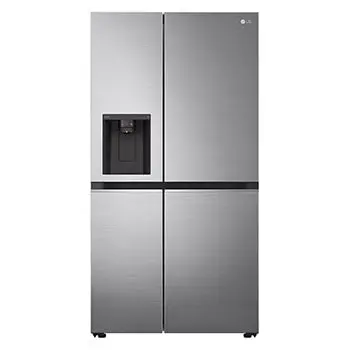
LG Refrigerator Not Cooling? 7 Causes and Which Part to Replace
Is your LG refrigerator not cooling the way it used to, even though the light still comes on and the display looks normal? This is one of the more stressful appliance issues to face, since food safety is on the line, but the good news is that cooling failures almost always trace back to one of a small number of known causes, most of which are fixable with the right part rather than a full replacement.
Buy LG Refrigerator Spare Parts Here
Why "Not Cooling" Doesn't Always Mean the Compressor Is Dead
A common assumption is that any cooling failure means the compressor has failed and the fridge needs replacing. In reality, the compressor is only one of several components involved in the cooling cycle, and issues with the thermostat, relay, condenser fan, or even something as simple as a door seal can produce identical symptoms. Diagnosing the actual cause before ordering a part saves both money and time.
7 Common Causes of an LG Refrigerator Not Cooling
1. Faulty Thermostat
The thermostat regulates internal temperature and signals the compressor when to run. A faulty thermostat may fail to trigger cooling at all, or cause inconsistent temperatures often mistaken for a bigger mechanical fault when it's a single, replaceable component.
2. Compressor Relay Failure
The relay supplies startup power to the compressor. If the relay fails, the compressor may hum without starting, or not engage at all a symptom that looks like compressor failure but is a far simpler and cheaper fix.
3. Dirty or Blocked Condenser Coils
Condenser coils release heat as part of the cooling cycle. When coated in dust or blocked by nearby clutter, they can't dissipate heat efficiently, reducing cooling performance gradually rather than suddenly. This is often overlooked because it doesn't feel like a "broken part" issue.
4. Faulty Condenser or Evaporator Fan Motor
These fans circulate air across the coils and through the fridge and freezer compartments. If a fan motor fails, cooling can drop sharply, especially noticeable as the freezer stays cold while the fridge section warms up, or vice versa.
5. Refrigerant Leak
A slow refrigerant leak causes gradual cooling loss over days or weeks, often with a faint hissing sound near the compressor area. This is one of the less common causes but shouldn't be ruled out if performance has been declining slowly rather than stopping suddenly.
6. Worn or Damaged Door Seal
A door seal that no longer creates a proper airtight closure lets cool air escape continuously, forcing the compressor to work harder while cooling still feels inadequate, especially noticeable in humid conditions where warm air seeps in more easily.
7. Faulty Main Control Board (PCB)
The control board manages signals across the entire cooling system. A fault here can cause seemingly random cooling behavior working intermittently, or stopping without any obvious mechanical cause since the underlying components may all be functioning correctly on their own.
How to Narrow Down the Cause Before Buying a Part
- Check the door seal first: It's the simplest and cheapest thing to rule out, and a surprisingly common cause.
- Listen for compressor sound: Humming without starting suggests a relay issue; complete silence points toward the thermostat or control board.
- Check for uneven cooling between fridge and freezer sections, which often points to a specific fan motor rather than the compressor.
- Inspect condenser coils for dust buildup, which is a maintenance fix rather than a parts replacement.
- Note how gradually the problem developed: Sudden failure vs. slow decline points toward different causes (relay/thermostat vs. refrigerant leak).
A Practical Tip From Experience
A mistake worth avoiding: replacing the compressor as a first attempt, since it's the most expensive component and the one people assume is at fault by default. In practice, thermostat and relay failures are far more common and far cheaper to replace; always ruling these out first can save a significant, often unnecessary, expense.
Why Source Replacement Parts From Fixail Spares
Once you've narrowed down the likely cause, getting the correct part matters. LG uses different thermostat, relay, and fan motor designs across refrigerator series, and a mismatched part won't resolve the issue even if it looks similar. At Fixail Spares, LG refrigerator parts are listed against specific model numbers, with clear compatibility guidance so you're not guessing, and support available if you're still unsure which component is actually behind your LG refrigerator not cooling properly.
Frequently Asked Questions
My LG refrigerator light works, but it's not cooling - what does this usually mean?
This typically rules out a complete power failure and points toward the thermostat, relay, or compressor system specifically, since the electrical circuit for the light is still functioning.
Why is my freezer cold but the fridge section isn't cooling properly?
This is a common sign of a faulty evaporator fan motor, which is responsible for circulating cold air from the freezer into the fridge compartment.
Can dirty condenser coils really cause a full cooling failure?
Usually not a complete failure, but significantly reduced performance; cleaning them is a simple first step worth trying before assuming a part needs replacing.
How do I know if it's the compressor or just the relay?
If the compressor hums but doesn't start, the relay is the more likely and cheaper fix. Complete silence with no humming points more toward the thermostat or control board.